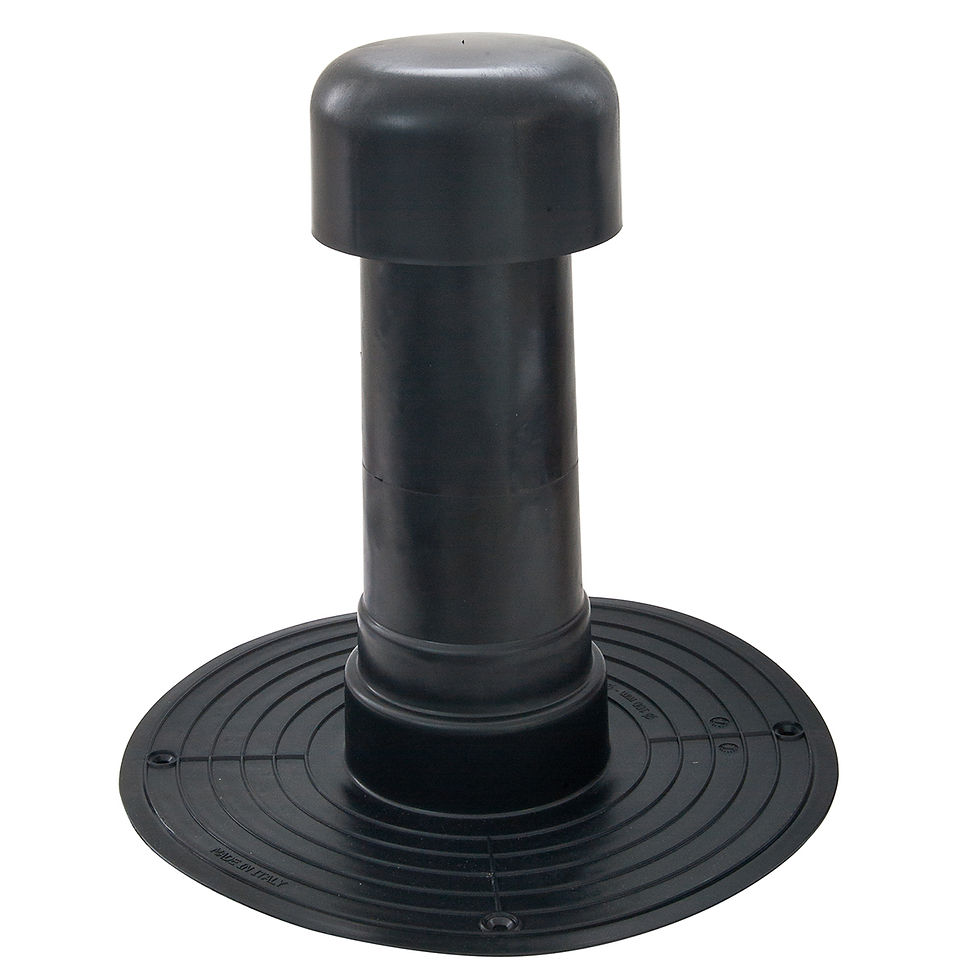
Flat Roof Deck Scupper / Parapet Drain - flange corner, square tube
From
£25.32
Volume Discounts applied in Cart · Volume Discounts applied in Cart
Flat-Roof Deck Scupper & Parapet Drains – What Are They Used For?
Scupper drains and parapet drains are essential components of a flat roof drainage system. Their primary purpose is to safely remove rainwater from the roof surface, preventing ponding, leaks, and structural damage.
Scupper Drains
A scupper is an opening or channel cut through the edge of a parapet wall or the roof perimeter. It allows water to drain directly from the roof deck to the outside, often discharging into a downpipe or a projecting spout (called a scupper tongue).
Parapet Drains
These are typically circular or rectangular outlets built into the parapet wall itself. They connect to internal or external downpipes and can often be fitted with a leaf guard to prevent debris from blocking the system.
Typical Usage Locations
- Along low-point edges of parapet walls
- Cut through coping stones or wall facings
- Integrated into metal flashing systems at roof perimeters
Areas of Use
- flat roof scupper drain
- parapet wall drain
- roof deck drainage
- flat roof overflow drain
- scupper outlet for parapet
- perimeter roof drain
- rainwater discharge for flat roofs
Quantity
Dimensions
100mm x 100mm / 500mm long
Prevent water ponding
Standing water adds excessive weight and accelerates membrane degradation. Drains ensure water is shed quickly.
Protect the roof membrane
Reducing prolonged water exposure extends the life of single-ply, built-up, and liquid-applied roofing systems.
Meet building regulations
Most UK building codes require flat roofs to have adequate drainage, often via scuppers, parapet drains, or internal outlets.
Work alongside primary drains
Scuppers often serve as secondary (overflow) drains in case primary roof drains become blocked.
Simple, low-maintenance design
Unlike internal drains with buried pipes, scuppers discharge visibly, making blockages easier to spot and clear.
Material
Made of TPE (thermoplastic elastomer)